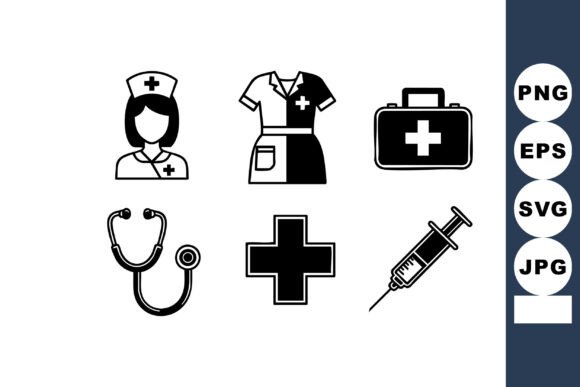
Medical Healthcare Symbols Set
A Designer’s First Look: Clean, Calm, and Instantly Recognizable
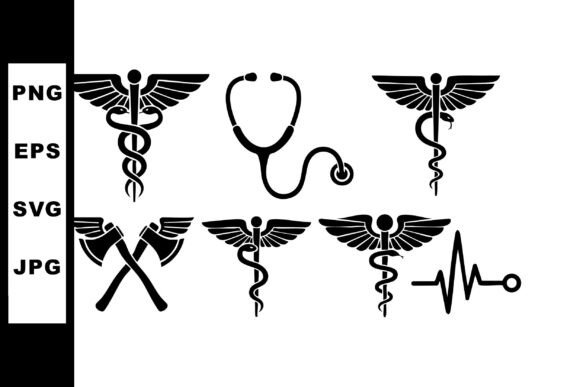
Opening the Medical Healthcare Symbols Set, I felt immediate relief — no cluttered layers, no over-rendered shadows or unnecessary gradients. Just crisp, confident black vector outlines of the caduceus, stethoscope, crossed axes, and heartbeat line. It’s not flashy. It’s not playful. It’s grounded, professional, and quietly authoritative. That tone matters — especially when you’re stitching for a nurse’s graduation gift, a clinic’s staff apron, or a boutique baby blanket for a pediatrician’s newborn. This set doesn’t shout; it reassures. And in embroidery, where every stitch carries weight and meaning, that restraint is a strength.
How It Stitches Up: Real-World Embroidery Behavior
I tested the Medical Healthcare Symbols Set on three real project types: a medium-weight cotton tote bag (for a local urgent care center’s volunteer giveaway), a soft fleece baby onesie (personalized gift), and a twill baseball cap (for an EMT team’s fundraiser). Across all, the clean lines translated beautifully — especially the stethoscope and heartbeat line. Their open shapes allowed satin stitch to flow smoothly without dense fill areas that can pucker thin fabrics. The caduceus held up well at 3.5" wide on the tote, but I’d avoid scaling it below 2.25" on apparel — the wing details and staff coils start to lose definition in thread.
The crossed axes surprised me. At first glance, it reads as bold and balanced — ideal for a patch or embroidered badge. In practice, its symmetry and strong negative space made it one of the most versatile pieces: it stitched cleanly on stretchy knit sweatshirts (with cutaway + tear-away stabilizer) and stayed legible even on textured tea towels. No floating threads, no skipped stitches — just solid, consistent coverage.
Where It Shines — and Where to Pause
This isn’t a “throw-it-on-anything” design set. Its quiet professionalism makes it perfect for:
- Custom apparel — especially crewnecks, lab coats, and unisex sweatshirts where clarity and dignity matter
- Embroidered patches — ideal for iron-on or sew-on medical staff badges, student ID accessories, or boutique nursery decor
- Baby embroidery — the heartbeat line works beautifully on onesies and burp cloths, offering subtle symbolism without clinical sterility
- Holiday embroidery — think embroidered kitchen towels for nurses’ Christmas gifts, or pillow covers for healthcare workers’ home offices
- Small shop product — pairs naturally with minimalist branding, clean packaging, and handmade presentation
But proceed thoughtfully with:
- Curved surfaces like caps — test the stethoscope or caduceus first; their longer vertical elements can distort if hooping isn’t precise
- Thin or delicate fabric — avoid heavy fill stitch density here; lean into running stitch outlines or simplified versions
- Dark fabric — since the original is black vector art, confirm your thread color choice creates enough contrast (white, ecru, or light gray often reads best)
- Frequent-wash items — reinforce backstitching on fine lines like the heartbeat curve, and always use quality stabilizer to prevent fraying over time
What It Adds to Your Finished Product — Beyond Stitching
Using the Medical Healthcare Symbols Set elevates more than appearance — it deepens intention. A personalized tote bag stitched with the caduceus doesn’t just hold groceries; it signals pride, purpose, and quiet expertise. A baby onesie with the heartbeat line becomes more than clothing — it’s a tender nod to life, care, and continuity. That resonance builds customer trust, especially among healthcare professionals who spot inauthentic or overly decorative symbols instantly.
For Etsy sellers and craft business owners, this set supports brand consistency without demanding custom illustration. You can use the same heartbeat motif across digital embroidery files, printable mockups, and physical products — keeping your shop cohesive and recognizable. And because it’s rooted in widely understood iconography, it boosts buyer engagement: shoppers recognize the meaning immediately, reducing hesitation at checkout.
Practical Notes Every Embroidery Designer Should Check
Before committing to a full run — whether for client work, holiday inventory, or your next Etsy listing — take these steps:
- Test on scrap fabric matching your final project’s weight and stretch
- Review stitch density — vector outlines don’t reveal how dense the fill will be; zoom into your embroidery software and adjust if needed for lightweight materials
- Confirm hoop size compatibility — some symbols may require repositioning or slight scaling to fit standard 4x4 or 5x7 hoops
- Inspect small details — especially the coil on the caduceus staff and the curve of the heartbeat line — ensure they’ll resolve clearly at your target size
- Try black-and-white mockups — see how each symbol reads against light and dark backgrounds before choosing thread colors
- Use proper stabilizer — medium cutaway for knits, tear-away for stable wovens, and fusible + tear-away for layered garments like jackets
- Verify licensing — as a Graphics and Illustrations asset, confirm whether commercial use of finished embroidered items or resale of digital embroidery files is permitted
Final Thought: Purposeful Design, Not Just Pretty Lines
The Medical Healthcare Symbols Set won’t win awards for novelty — and it shouldn’t. Its value lies in reliability, recognition, and respectful simplicity. It’s the kind of design that disappears into the background of daily wear while still carrying quiet significance. Whether you’re stitching a single personalized gift or building a collection of medical-themed craft business products, this set delivers what matters most: clarity under needle, confidence in execution, and meaning in the making.