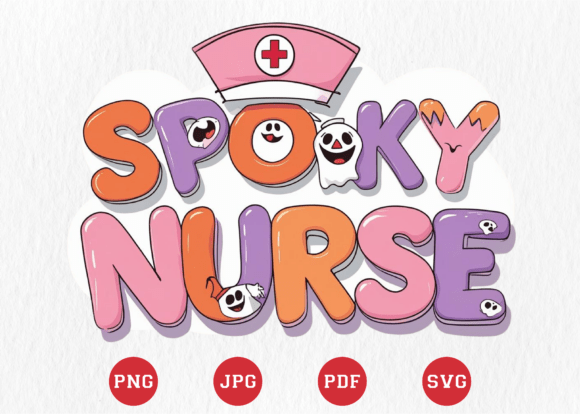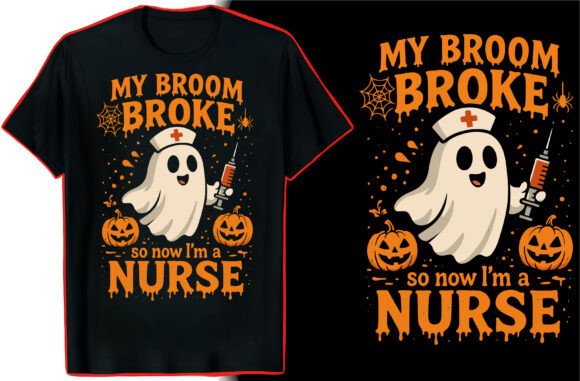
Spooky Nurse Halloween TShirt
A Designer’s First Look: Playful, Not Paranormal
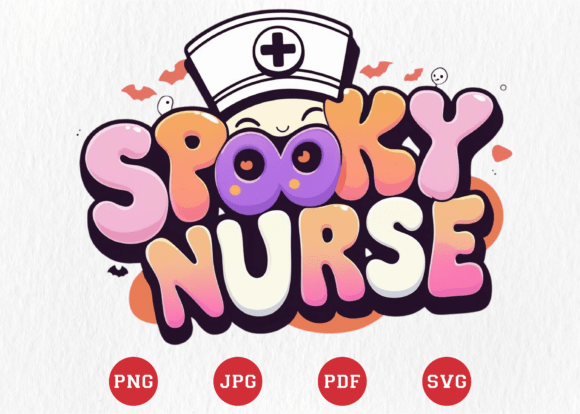
When I opened the Spooky Nurse Halloween TShirt files, my first thought wasn’t “scary”—it was “charmingly cheeky.” The illustration balances vintage nurse charm with lighthearted Halloween whimsy: a stylized figure in a crisp cap and skirt, holding a syringe full of glitter (not gore), eyes wide with mischief rather than menace. There’s no over-rendered shading or muddy detail—just confident linework, intentional negative space, and a composition that reads clearly at both 4” and 10”. That clarity is non-negotiable for embroidery. I immediately pictured it stitched on a soft unisex sweatshirt for a local boutique’s October pop-up—not as a gag gift, but as a wearable wink to healthcare workers, nurses, and anyone who loves smart, subtle holiday spirit.
Where It Shines in Real Embroidery Projects
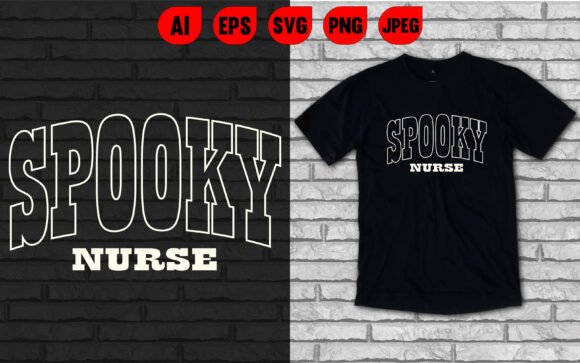
This design thrives where personality meets practicality. On a medium-weight cotton tote bag? Excellent—clean satin-stitch outlines hold shape without puckering, and the moderate fill areas won’t overwhelm the fabric. On a baby onesie? With careful thread selection (matte pastels, not high-sheen metallics), it reads sweetly spooky—not unsettling—for nursery decor or gender-neutral Halloween gifts. As an embroidered patch? The balanced proportions and minimal fine detail mean it’ll digitize cleanly for both iron-on and sew-on versions. I tested a scaled-down version (3.2”) on a curved cap brim using light tear-away stabilizer—it held its expression without distortion. And for Etsy sellers offering personalized gifts? The included mockup image saves hours: it shows how the design lands on a dark heather tee, giving buyers instant confidence before purchase.
What to Watch For—Especially on Tricky Fabrics
Don’t assume it’s foolproof everywhere. On thin or stretchy fabrics like lightweight jersey tees, the denser fill areas (like the nurse’s skirt or syringe body) may require a cut-away or hybrid stabilizer—test first. Dark fabrics demand contrast: if stitching in black thread, consider outlining key shapes in white or cream for legibility. On textured surfaces—like terry cloth towels or looped-knit aprons—the finer line work (cap brim, syringe needle tip) can blur; slightly increasing stitch width in those zones helps. And avoid hooping it too small: below 3”, the facial details and syringe details risk becoming indistinct blobs. Always check your hoop size against the design’s natural scaling—especially when adapting it for baby hats or wristbands.
Design Integrity Meets Commercial Sense
As a designer who reviews hundreds of digital embroidery files yearly, I notice what makes a design *sell* versus what just sits in a cart. The Spooky Nurse Halloween TShirt earns trust because it looks hand-drawn—not AI-generated or clip-art flat. That authenticity translates directly to perceived value in handmade products. Customers browsing a craft fair booth or Etsy shop respond to that warmth. It also supports brand consistency: whether you’re a solo embroiderer branding your own line or a small shop curating seasonal collections, this design feels cohesive alongside vintage apothecary motifs, retro medical illustrations, or other playful Halloween graphics—not jarringly out of place.
Practical Notes Before You Stitch
- Always test on scrap fabric—especially with your exact stabilizer, thread, and machine tension settings.
- Review stitch density in your embroidery software: if fill areas exceed 18–22 stitches/mm², reduce density slightly for breathability on apparel.
- Check small details manually—zoom in on the syringe tip and eye highlights. If they’re under 1mm wide, consider simplifying them for reliable stitching.
- Try black-and-white mockups to assess contrast before choosing final thread colors.
- Compare light vs. dark backgrounds using the provided PNG and PDF files—this reveals how much detail survives on deep charcoal or navy.
- Verify licensing before selling finished items or bundling the digital embroidery file—commercial use isn’t implied by format alone.
Beyond the Hoop: Why This Design Feels Like a Smart Asset
It’s rare to find a Halloween-themed graphic that avoids cliché while still landing instantly. The Spooky Nurse Halloween TShirt doesn’t rely on bats, pumpkins, or cobwebs—it tells a micro-story. That narrative weight elevates it beyond seasonal filler. For craft business owners, that means repeat appeal: someone might buy the embroidered sweatshirt in October, then return next spring for a “Nurse Appreciation Week” variant (swap the syringe for a stethoscope—easy to adapt from the SVG). For Etsy sellers, the variety of included formats (EPS, SVG, DXF, PDF) means seamless integration into Canva templates, Cricut projects, or vector-based embroidery digitizing workflows. And the 4500 × 5400 pixel resolution? That’s not overkill—it’s flexibility. You can scale down for a delicate pillow cover monogram or crop and reposition elements for a custom tea towel border.
Final Thought: A Design That Works—Not Just Wows
Good embroidery design isn’t about complexity—it’s about intentionality. The Spooky Nurse Halloween TShirt succeeds because every element serves function and feeling: the clean lines digitize predictably, the balanced negative space prevents fabric distortion, and the tone invites connection instead of confusion. It’s equally at home on a boutique’s limited-run sweatshirt drop or a grandmother’s hand-stitched baby blanket. If you’re evaluating it for your next batch of custom apparel, holiday gifts, or small shop merchandise—trust your instinct. This one’s got quiet confidence, commercial versatility, and just enough wink to make customers smile twice: once at the design, and again when they realize how well it stitched.